OpenBazaar adds BCH, Zcash and looks towards tokens

xxx

“But I do find the argument that tokens are this unnecessary evil silly because for decades we have built applications and websites that reward users with sort of ‘tokens’; up-votes, or likes, or favourites, or retweets.

“Those are social currencies. Y

From OpenBazaar adds BCH, Zcash and looks towards tokens

xxx

PesaLink ten-month fraud lessons forces cap on transaction amounts :: Kenya – The Standard

xxx

“IT Risk and Internal Control Consultant at NetGuardians John Kiptum said… 70 per cent of the fraud is usually internal where bank staff reset your pin number, do a SIM swap so you no longer receive short message notifications and after that pick your account empty.”

From “PesaLink ten-month fraud lessons forces cap on transaction amounts :: Kenya – The Standard”.

xxx

A cup of crypto: Starbucks and Dunkin’ both discussed bitcoin in their analyst days – MarketWatch

xxx

Howard Schultz, the executive chairman of Starbucks, discussed bitcoin and blockchain in greater detail. In the Jan. 25 call, he said that “I don’t believe that bitcoin is going to be a currency today or in the future,”

From A cup of crypto: Starbucks and Dunkin’ both discussed bitcoin in their analyst days – MarketWatch

xxx

There are decades where nothing happens; and there are weeks where decades happen

A thousand years ago the people of England were going about their daily business of growing sheep and suchlike and probably didn’t realise that, these being days long before universal suffrage and representative democracy, they were about to become part of a Scandinavian empire (and without a referendum). This happened when the Saxon King Edmund Ironside died, which led to no end of trouble, because the Saxons of middle England had already chosen Cnut as their king but the cosmopolitan inhabitants of London opted out and went with Ethered’s grandson Edmund Ironside. Then, as now, London was another country but when Ironside died, London couldn’t hold out and Cnut the Great became the King of England. He was the Son of Sweyn Forkbeard a daughter of the King of Poland (bloody Polish kings coming over here and taking all of our monarch’s jobs). He was a grandson of Harald Bluetooth. He became the king of Denmark in 1018 and the King of Norway in 1028, forming the Anglo-Scandinavian North Sea Empire. This Empire, it has to be said, did not last very long but following Brexit, who knows!

Five hundred years ago the Polish-Lithuanian Commonwealth was on the way to becoming biggest country in Europe. It eventually stretched from the Baltic down to the Black Sea and was powerful enough to invade Russia and occupy Moscow. I’m sure the inhabitants of the Polish-Lithuanian Commonwealth (which, by the way, had a very interesting constitution that included proto-democracy) thought that it would last for ever and found it very difficult to imagine any other form of government or, indeed, sovereignty.

Two hundred years ago, in the newly independent United States of America (which was having another go at forming a central bank), the last-ever Federalist Party candidate had lost the election to previous Secretary of State Monroe. America instituted a series of tariffs against British goods, deciding that following the war of 1812 it no longer wanted to be in a free trade alliance with us.

One hundred and fifty years ago there was a Latin Monetary Union, or “Victorian Euro” as I think about it. It was created by France, Belgium, Italy and Switzerland  but was later adopted by countries ranging from Peru and Venezuela to Serbia and Bulgaria. Another late joiner was Greece, in 1867. Greek economic problems meant that they began debasing their version of the currency and they were chucked out in 1908 and then let back in 1910. Ultimately the whole thing fell apart because countries printed paper money that wasn’t backed by a bimetallic reserve and it formally ended in 1927 (although the Swiss continued to mint coins to the LUM standards for size, weight and fineness until 1967). In 1866, people must have thought advantages of a single currency unarguable.

A hundred years ago the last Emperor or Russia must have found it very difficult to imagine any other Russia than the feudal state he ruled, but it (and he) was gone in a flash. When Lenin (who once said that the best way to destroy the capitalist is to debauch the currency) led the October Revolution, overthrew the government and established a one-party state the average Russian must have been utterly astonished at the turn of events. Sometimes, things change really quickly.

Now we have Brexit. I’m not for one moment suggesting that Brexit is a revolution but sometimes profound change can come along relatively quickly, as things tumble out of control following a long period of stasis. Punctuated equilibrium, they call it in biology. Post-Brexit I favour going back to the beginning and re-establishing the North Sea Empire but other people will, no doubt, favour new and unexplored alternatives. The United Kingdom may not survive the fall-out and Sterling may follow. Change is in the air.

A generation from now who knows where we will be. It seems to me, though, that one plausible scenario is that set out in Gill Ringland’s report for Long Finance. She envisages a world dominated by cities rather than countries (which fits with my world view, the Jane Jacobs “Cities and the Wealth of Nations” perspective of economies as cities and their hinterlands). The World Economic Forum came out with a sympathetic paper on this last year. In such a city-centric world, where the mayor of London has more power than the Prime Minister and London’s trade deal in services with Beijing is more important than the UK’s trade in goods with China, we will probably remember the European Union much as we remember the Polish-Lithuanian Commonwealth and Sterling as we remember the Latin Monetary Union. Neither the United Kingdom nor the Pound Sterling are laws of nature.

What might be the trigger for the new world order? I think there is a plausible case to me made of digital currency as the change agent. Suppose there is a Chinese digital currency, traded in London, used all the way along the “belt and road”, that begins to eat away at the U.S. Dollar’s share of word finance? What if there is an Islamic digital currency based on gold that people around the world begin to hodl (sic) instead of Bitcoin? What if New York State decides to have its own digital currency that has it’s own rules, mores and community values? Oh, wait… in November New York State Assembly member Ron Kim, Senator Julia Salazar, and Cornell law professor Robert Hockett announced the Inclusive Value Ledger (IVL) proposal. If passed, it would create the America’s first publicly-owned payments platform as well as a digital currency that could be exchanged for goods and services within the state. All New York has to do is to require taxes to be paid in this new currency and it would become a rival to the Canadian Dollar and the Swedish Crown on the world stage.

If you think Facebook’s Libra is the future of money, then you are almost certainly wrong. But if you think that Facebook’s Libra may be a catalyst for others to create new currencies that could threaten the U.S. Dollar’s position at the top of the currency totem pole, then you are almost certainly right. 

What a good idea for a book.

(The title, by the way, is another quote from Lenin.)

Germany Is Still Obsessed With Cash – Bloomberg

xxx

The average German wallet contains 103 physical euros, the European Central Bank estimated in November, more than three times the figure in France. Cash is still the means of payment in some 80 percent of point-of-sale transactions, compared with only 45 percent—and falling fast—next door in the Netherlands.

From Germany Is Still Obsessed With Cash – Bloomberg

xxx

POST Claims are processes

Half a century ago, the media theorist Marshall McLuhan who predicted that seismic social shift that the coming online environment would cause in human relationships said of it that “In the new electric world, where everybody is involved with everybody, where everybody is involved in complex processes, the old identity cards, the old means of finding out who am I, will not work”.

Indeed.

McLuhan had this notion of identity as smeared across entities, depending on the relationships and interactions between identities (what Ian Grigg calls “edge” identity). IN t

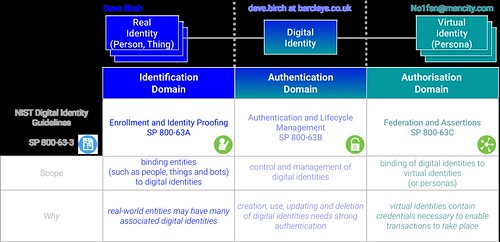
So what will work? I (and others) have long argued that shifting to an infrastructure where transactions are between virtual identities and enabled by credentials is the way forward.

In Phil Windley’s “Self-sovereign Identity and the legitimacy of Permissions Ledgers” he says, if I interpret him correctly, that a claim is the process of providing a credential and authenticating its use in order to obtain authorisation. That seems like a reasonable working definition, so let’s move forward with that. What McLuhan 

Cashless: CBN to revoke 15 mobile money licences

Nigeria is a fascinating business school case study of the relationship between regulation and technology in payments. It ought to be a mobile payments powerhouse, but the regulatory strategy there has resulted in a plethora of subscale mobile money businesses.

Despite having 21 mobile money operators licensed by the CBN in the circulation, the volume of transaction on the payment platforms is still grossly low

From Cashless: CBN to revoke 15 mobile money licences

xxx

Getting down down under

Well, this week we saw another milestone in the evolution of the global payments marketplace.

The New Payments Platform (NPP) will enable customers of Commonwealth Bank, National Australia Bank and Westpac to send money via a service called PayID, which requires users to enter only the recipients’ mobile phone number or email address. Other financial institutions, including ANZ, will follow.

From Aussie real-time payments platform goes live

xxx

NPPA on launch day.//embedr.flickr.com/assets/client-code.js

To celebrate this event, I went to Australia to record a podcast with NPP Australia Ltd, who developed the system with 13 financial institutions. Adrian Lovney is CEO of NPP Australia and Katrina Stuart is the Executive Manager for Engagement. In the podcast, they explain the key features of NPP and chat about the new products and services that it could enable.

From a UK perspective, I’d highlight three areas where NPP is different to our existing Faster Payment Service (FPS) and may inform debate about our New Payments Architecture (NPA). These are settlement, data and

First, settlement. NPP is a real-time gross settlement system (RTGS), unlike FPS which is a net settlement system.

Second, data. NPP uses ISO 20022, where FPS uses the old ISO 8583, which is why when you Ping money to someone you only get a handful of alphanumeric characters for you payment advice. With NPP you can send huge quantities of data along with the payment advice, which itself can be 200 characters and include the full ISO character set (including emojis, like Venmo).

Third, addressing. NPP allows you to send money to a “PayID”, which can be 

₹21.54 crore in fake currency seized post demonetisation; Delhi, Gujarat on top – The Hindu

xxx

The aggregate value of fake currency seized has increased since 2013. By collating the data issued by the government in response to two questions previously raised in Parliament on May 3, 2016, and July 25, 2017, it can be observed that the total value of fake currency seized has gone up post-demonetisation.

From ₹21.54 crore in fake currency seized post demonetisation; Delhi, Gujarat on top – The Hindu

xxx

Design a site like this with WordPress.com
Get started